
Dispatch #4: Place Training — The task every Dog should know!
What is Place Training?
Place training has gained massive popularity in recent years for a very good reason, it works. If you have seen trainers talk about it on social media, they usually use some sort of platform, table, or dog bed and command the dog to step onto it and remain there. That is the essence of it. But the value of this exercise is far more complex than just being able to tell your dog to go lie on their bed. By using a clearly defined boundary, we are providing the dog with a physical representation of the "implied stay," making the concept of stability tangible and easy.
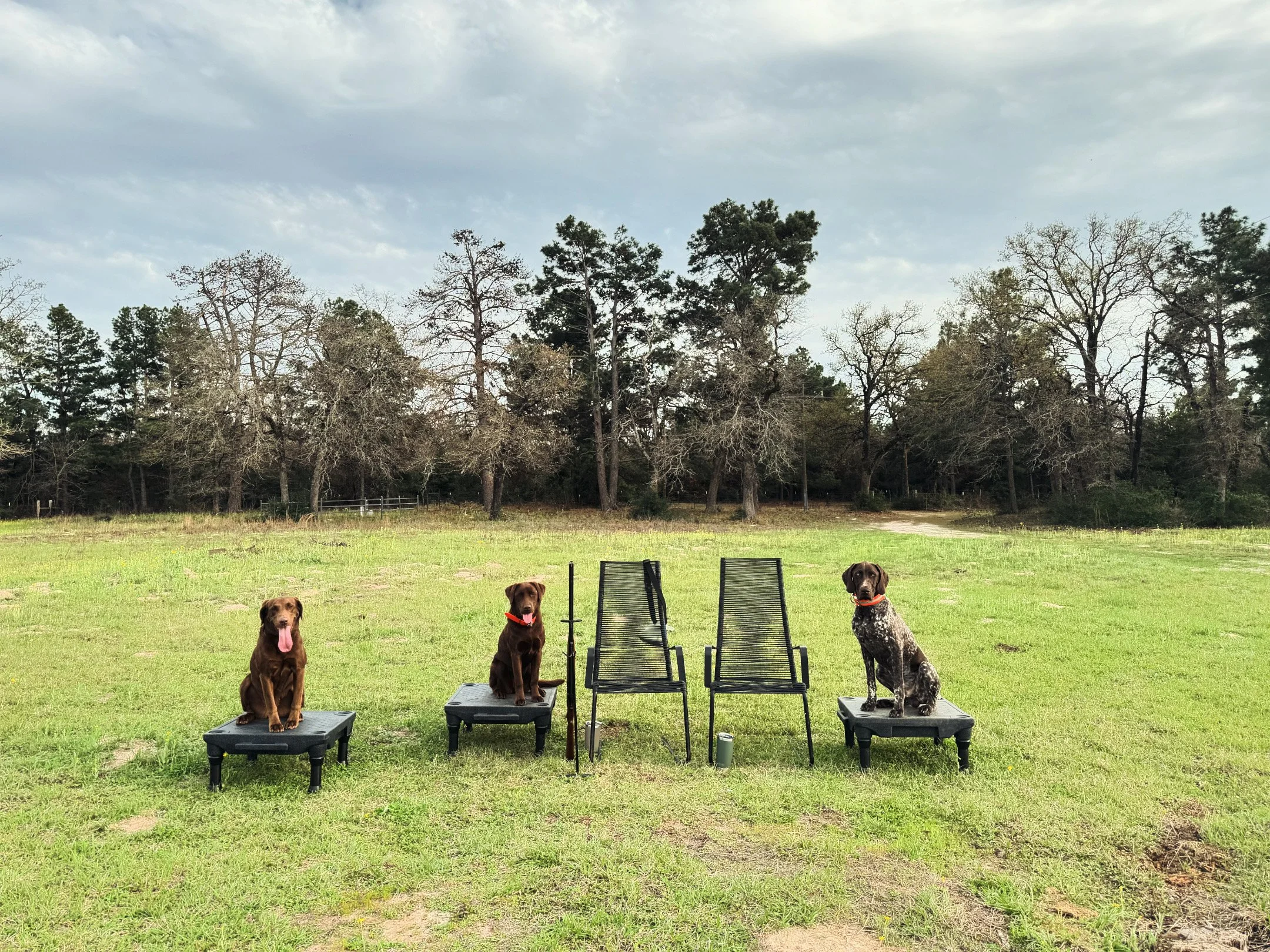
From left, hunting dogs Lucy, Mocha and Archer participate in place training to work on stability amid gunfire and falling birds in Kosse, Texas, in 2024. (Photo by Staff Sergeant Walther, U.S. Army )
Physical Benchmarks: The Geographic Contract
Being able to direct a dog to stay within a designated area without restraint or a physical guide can come in handy in countless ways. Through this training, the dog will understand that the command "Place" is a geographic contract. Once the dog’s paws cross that threshold, they have entered a zone where the only exit is a release marker from you.
Examples in daily life are plentiful; here are a few:
Placing the dog on the scale or examination table at the vet.
Sending the dog to lie on a dog bed when guests are over.
Placing the dog on the door mat while you are doing yard work.
Placing the dog under a table at a café while you are conversing with friends.
Placing the dog on your tailgate while you are putting your boots on to go hiking.
From left, pet Hiwa, hunting dog Lucy and Military Working Dog Jack V472 are placed on dog beds while the Earnest Family had dinner with guests in Mansfield, Texas 2023. (Photo by Staff Sergeant Walther, U.S. Army )
Mental Benchmarks: Strengthening the "Off-Switch"
Perhaps the single biggest benefit of place training is that it builds an "off-switch" in the dog. It is arguably the best way to teach our dogs how to move from active compliance and anticipation into passive relaxation. When you use the command "Place" without following it up with a "Stay," you are forcing the dog to engage their own cognitive brakes. The dog will learn that, depending on the context of where it was sent, its task is no longer to "do" anything, but to just relax. The sign of success is when the dog stops scanning the environment for "what’s next" and accepts that the current task is simply to exist in that space. This is the prefrontal cortex successfully "braking" the motor impulses, as mentioned in Dispatch #3. By requiring the dog to hold this position independently, you are physically strengthening the neural pathways responsible for impulse control. Strengthening this mental skill will directly benefit your dog’s stability in virtually all circumstances.
The Superpower of Environmental Neutrality
Does this translate into other areas of training? As I just mentioned, it translates into everything! Once your dog has the ability to shut out the noise of its environment and ignore everything except input from you, you will see that every other task becomes much easier.
The true superpower of this task is that you can use it to introduce your dog to most new stimuli and environments in a controlled and clear manner. For example, if you want to have a picnic with your family in a park, you may be worried that your dog will be distracted by other dogs running around or kids playing frisbee. If your dog reliably knows the "Place" command, you can simply take your platform with you. The platform acts as a familiar anchor point in a sea of new distractions. Now, instead of everything being super exciting and inviting, the dog has a familiar platform and a clear understanding that when it is placed onto it, the outside world will not interact with it and vice versa. It creates an environment in which the dog can relax much quicker and with much less confusion. From there, you can introduce your dog to each stimulus one at a time to avoid it being overloaded. And when you notice your dog needs a break, you basically have a command for it to relax.
Note: —Crate training is a form of place training; it’s just specific to a crate. Many trainers prefer the broader term because it implies, we are not only using a crate but a variety of platforms in different contexts to generalize the concept of stability. —
Equipment
When you start out, what matters is that you use a clearly defined area that is elevated a few inches off the ground. It should be firm and stable so that the dog can easily get on and off without it sliding. As far as size goes, the dog should be able to sit and lie down comfortably, but it shouldn't be so big that they can spread out or roll around.
Elevation is the key to clarity. Not only is it a visual and texture difference, but it requires the dog to physically lift its paws to step on and off. This provides much greater contrast than a flat rug, making it unmistakably clear to the dog whether they are ON or OFF the platform.
There are commercial options specifically designed for training this task. They include Cato Board and KLIMB. They are great options, but are quite costly. Cost-Effective alternatives include elevated dog beds from Amazon, or a DIY plywood platform with scrap lumber for legs. Tom Dokken famously uses old car tires with a plywood lid. If cost is a concern don’t fret, get creative as long as it’s safe and meets the criteria outlined above.
The Basic Training Protocol: Building the Anchor Point
Reminder: anytime you teach something new, you want to be in a sterile but comfortable environment with as few distractions as possible. The first goal is to classically condition the platform as a happy place.
The Leash: Start with the dog on a regular five-foot leash attached to a flat collar. Walk the dog directly toward the platform. As soon as its first paw steps onto it, mark "Yes" and reward. Repeat for a few repetitions and take a break.
Incremental Success: Next, do the same thing but wait for the dog to place two paws on the board before marking and rewarding and so on. Eventually, wait for the dog to jump onto the platform entirely. If it is hesitant, do not force it, gently guide it with the leash while maintaining a positive attitude. Think of Bob Ross, “No mistakes, just happy accidents”. We are building a happy place, corrections come WAY later.
Adding the Command: Once the dog reliably anticipates the reward for stepping onto the platform, condition the verbal command. I simply like to use "Place". Walk toward the platform and, right before the dog steps onto it, calmly and clearly say "Place", then mark and reward.
Losing the Leash: After enough repetitions, it’s time to lose the leash. Put your dog in a "Sit" close to the platform. Ensure they are stable and engaged, then command "Place". Hopefully it gets on the platform independently and with excitement, at which point all you need to do is Mark, Move, Pay and repeat. Should they struggle, help them by taking a single step toward the platform until they build confidence.
At this point, you have taught the "Place" command. Don’t forget to work on the "3 D's"—Duration, Distance, and Distraction BEFORE you move into other platforms and environments and stimuli. Remember: true stability is a quiet dog on a platform, making the active choice to stay because the rules of the game are perfectly clear. If they remain there without you hovering or repeating yourself, they are beginning to understand the implied stay.
From here, the sky is the limit, transfer this task to all the scenarios we covered previously and more. Everyone’s lifestyle is different, but I guarantee you will be able to find situations in which this command will make your life easier and most of all keep your dog safe and out of trouble!
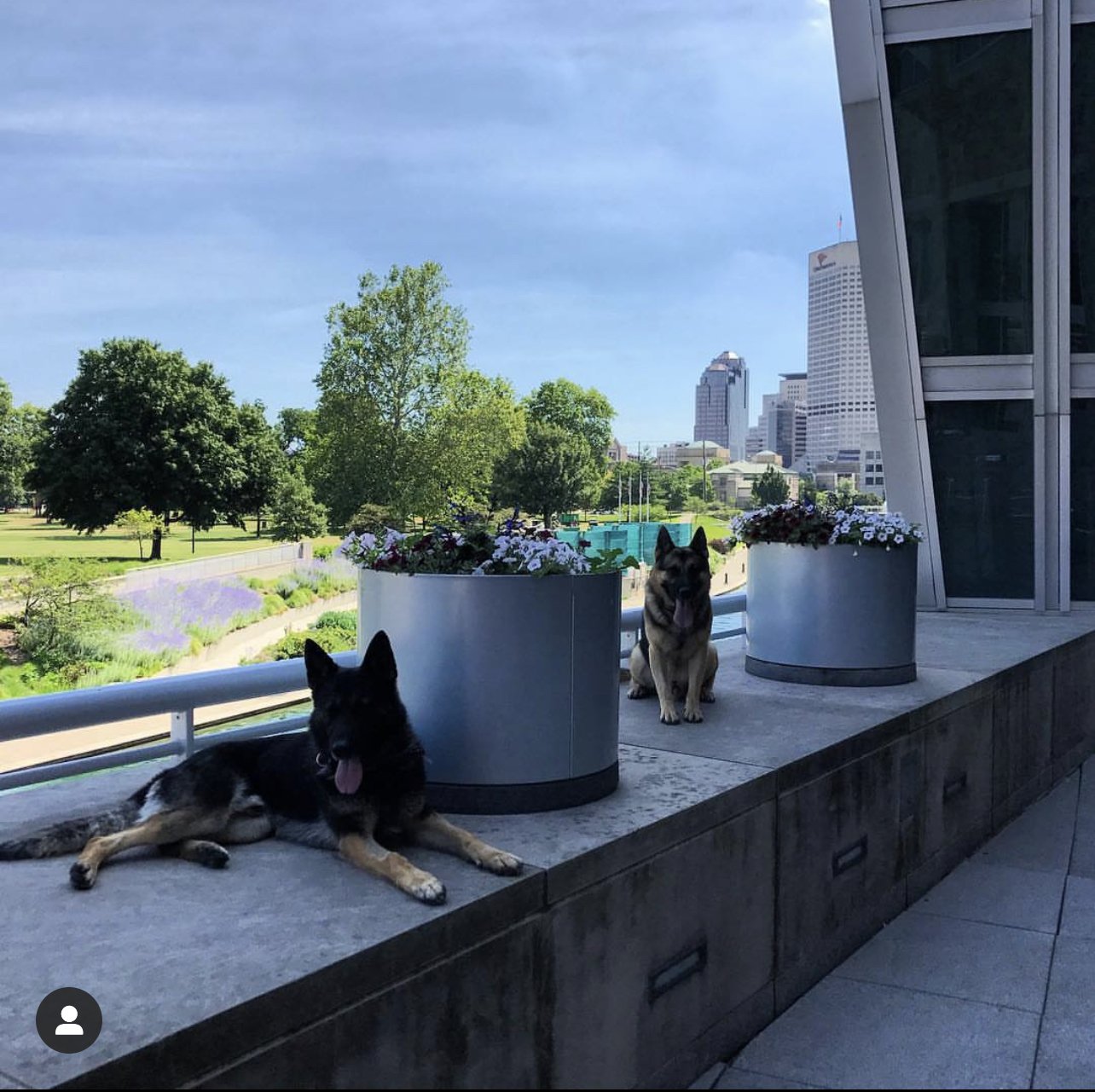
Military Working Dogs Larry and Jack placed out of the way during a break, while supporting the United States Secret Service during a wedding which Vice President Mike Pence attended in Indianapolis, Indiana 2017. (Photo by Private First Class Walther, U.S. Army )